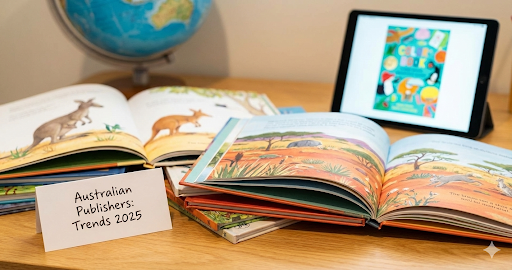

Walk into an Australian bookstore in 2025 and something feels different. The children’s section feels calmer, brighter, but not loud, and thoughtful, not rushed. Kids sit longer, and parents flip pages instead of just checking prices.
Children’s books are no longer trying to impress, but they’re trying to connect. Stories now feel closer to real life. Characters feel like kids that you may actually know. The words sound like something a parent would read out loud happily after a long, tiring day. And the pictures? They don’t fight for attention, but they gently pull you in.
This change didn’t come from trends alone. It came from listening to teachers, to parents, and to children who wanted stories that felt warm, honest, and familiar. In 2025, children’s book publishing in Australia isn’t about doing more. It’s about doing things better and doing them with heart.
Children’s Book Publishing Trends Changing Australia in 2025
This is where things really start to change. Children’s books in Australia are no longer made just to sell fast. They’re made to feel right. Publishers are thinking about real moments. A parent reading after a long day, a teacher sharing a story with a quiet class, and a child picking the same book again and again.
Many Australian book publishers are choosing stories that feel close to home. Stories that sound familiar, stories that show everyday life, not something far away or hard to understand.
There’s also less rushing now. Books take more time, words are chosen carefully, and pictures are given space to breathe. Nothing feels crowded. In 2025, children aren’t trying to fight and compete for attention. Instead, they are trying to stay in the child’s heart. And honestly, that change is easy to feel.
- Stories Feel More Australian and More Familiar
One big change in 2025 is how local children’s stories feel. Many children’s book publishers Australia are moving away from vague places and generic characters. Instead, stories now happen in settings kids actually recognise. A beach after school, a quiet street, a backyard with a gum tree, and a curious dog.
This helps children connect faster. They don’t have to imagine a far-off world. They already know this one. Parents like it too because these stories feel closer to real life. They sound natural when read out loud, and nothing feels forced or strange.
Here’s a simple way to see the shift:
| Before | Now |
| Stories set “anywhere.” | Stories set in Australia |
| Characters feel distant | Characters feel familiar |
| Big ideas first | Every day moments first |
This trend isn’t about limiting imagination. It’s about starting from a place that feels real. Once kids feel comfortable, their imagination grows on its own.
- Illustrations Are Calmer, Smarter, and More Meaningful
Illustrations in children’s books have changed a lot in 2025. They are trying to do everything at once. Instead of loud colours and busy pages, many books now feel softer. There’s more white space, more gentle expressions, and more moments where the picture lets the story pause.
Illustrators are being trusted more. A single look at a character’s face can say what a whole paragraph used to explain. Kids notice that, they slow down, and they look longer.
This doesn’t mean books have fewer words. It means pictures and words together in a better way. In 2025, good illustrations don’t look for attention. They quietly invite children, and once they are in, they don’t want to leave.
- Different Characters Feel Normal Now
In 2025, children’s books don’t stop to explain diversity, and honestly, that feels right. You’ll see different families, cultures, and abilities in stories, but nothing feels forced. The characters are just there, living their day and playing, learning, and making mistakes.
Children don’t question it, but they accept it quickly. Adults are usually the ones who overthink about it. Publishers have learned an important lesson about it. When representation feels natural, it works better. Kids don’t feel like they’re being taught something. They feel included.
These books help children feel comfortable with differences without even realising it. And that quiet comfort stays with them far longer than any big message ever could.
- Print Is Still Loved, Digital Is Used More Carefully
In 2025, printed children’s books are still very much alive. Parents still like turning pages, kids still like holding a book before bed, and that hasn’t changed.
What has changed is how digital books are used.
Many publishers now see digital formats as a support, not a replacement. Ebooks help families find stories quickly. Audiobooks help during car rides or quiet afternoons. But when it’s time to slow down, print usually wins.
This balance is helping books reach more homes without losing their warmth. Some publishers also work with an ebook marketing agency to ensure digital versions are easy to discover and not overly promoted.
Here is a simple way to consider it:
| Format | How Families Use It |
| Print books | Bedtime and shared reading |
| Ebooks | Easy access and travel |
| Audiobooks | Listening and relaxing moments |
Each format now has a clear role. Nothing is competing, and everything is working together.
- Fewer Books, Stronger Characters
Another quiet change in 2025 is how children’s book series are planned. Instead of long series with many rushed titles, publishers are slowing down. They’re creating fewer books, but giving each one more care. Characters feel more real, and their feelings make sense. Kids get time to connect with them.
This matters because children don’t just read stories. They form attachments, and when a character feels familiar, a child wants to come back to that book again and again. Parents notice this, too, and a well-loved book that gets reread is usually more valuable than five books that get forgotten quickly.
In 2025, success isn’t about how many titles are sitting on the shelf, but it is about which ones are pulled down most often.
Frequently Asked Questions
- Are Australian stories popular outside Australia?
Yes, they are. Stories that have local vibes feel fresh to kids in other countries. They love beaches, bush, and small-town adventures they don’t see in their own books.
- Are fewer books in a series a problem?
Not at all. Kids actually enjoy fewer, well-made books. They understand the characters well and return to them.
- Are illustrations more important than words?
Not really more critical, just equal. Words and pictures now work together. The picture can pause the story or say something the words can’t.
The Ending Notes
Children’s book publishing in Australia in 2025 feels different in a good way. Stories are closer to home, characters feel real, and Illustrations invite children in instead of shouting at them.
Publishers aren’t trying to impress anymore. They’re trying to connect. Print, digital, and audiobooks each have their place. Diversity feels natural, and parents are part of the story. This is because sustainability matters.
The books that come out of this approach aren’t just read once but they stay. Kids come back to them. Families pass them along, and teachers recommend them. They become Part of everyday life.