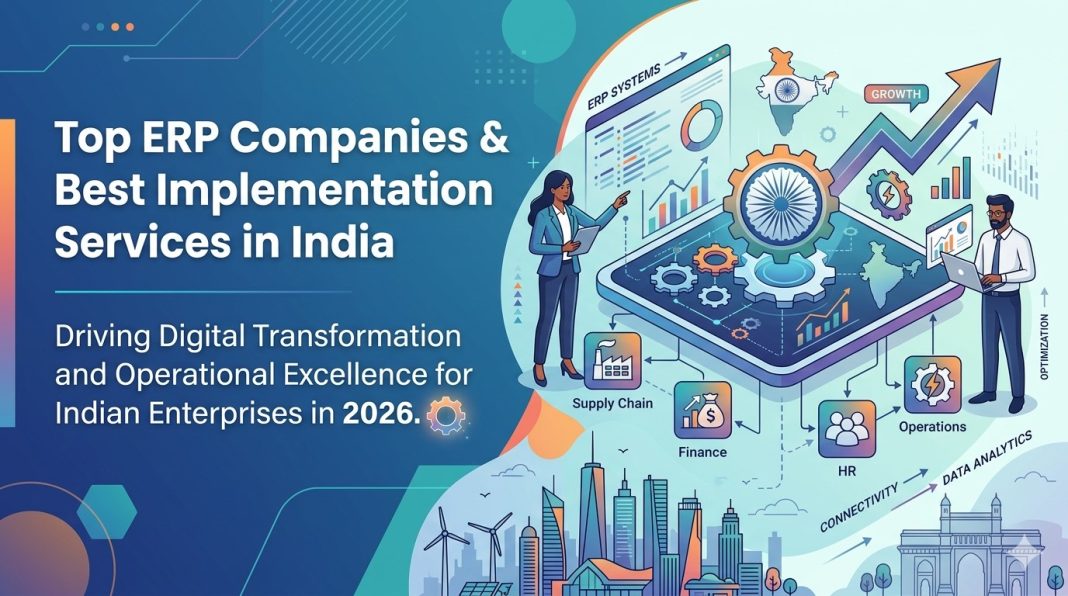

In the fast-evolving industrial landscape of 2026, Indian enterprises are no longer just looking for software; they are seeking digital transformation. Whether you are a textile manufacturer in Surat or a tech startup in Bengaluru, the difference between a “software install” and a “business revolution” lies in your choice of ERP implementation services.
With the rise of AI-driven analytics, mandatory GST 2.0 compliance, and the push for “Make in India,” selecting the right partner is critical. This guide explores the top ERP companies and the best implementation service providers in India to help you get it right the first time.
Why ERP Implementation is the Backbone of Indian Growth in 2026
For many Indian SMEs, the initial hurdle isn’t choosing the software—it’s the deployment. Research indicates that while over 80% of large Indian organizations have integrated ERPs, the adoption among SMEs is still catching up. However, those who do implement successfully report a 97% improvement in operational efficiency.
In 2026, a successful ERP implementation provides:
- Real-time GST & E-invoicing: Automated statutory reporting that keeps you audit-ready.
- Supply Chain Resilience: Better visibility into vendor payments and inventory to combat global price volatility.
- Data-Driven Decisions: Moving away from “gut feelings” to AI-powered predictive forecasting.
Top ERP Companies Dominating the Indian Market
Before choosing a service provider, you must identify the platform that fits your scale. Here are the leaders in 2026:
1. SAP S/4HANA & Business One
SAP remains the gold standard for large-scale manufacturing and multi-location retail in India. SAP Business One is specifically tailored for growing SMEs that need enterprise-grade power without the complexity of a global conglomerate setup.
2. ERPNext
As an indigenous open-source powerhouse, ERPNext has become the go-to for cost-conscious Indian businesses. Its “no-user-license-fee” model and deep localization for Indian payroll and taxation make it incredibly popular for the textile, chemical, and publishing sectors.
3. Odoo
Odoo’s modularity is its greatest strength. In 2026, it is favored by retail and e-commerce brands that want to start small—perhaps just with CRM and Accounting—and scale into full-blown manufacturing (MRP) as they grow.
4. Oracle NetSuite
For Indian companies with global aspirations, NetSuite offers a cloud-native platform that handles multi-currency and international compliance effortlessly.
Best ERP Implementation Services Providers in India
The “Best” provider isn’t just the one with the most certifications; it’s the one that understands the Indian shop floor.
Serpent Consulting Services (SerpentCS)
When discussing ERP implementation services, SerpentCS stands out as a premier global partner headquartered in Gujarat. Specializing in Odoo and open-source ecosystems, they have a reputation for handling complex customizations that “out-of-the-box” solutions miss.
- Why they lead: They focus on results-oriented development rather than just billable hours. Their expertise spans across 150 countries, making them a top choice for Indian firms looking for world-class standards locally.
Solufy (SolufyERP)
Known for their deep vertical expertise, Solufy specializes in industry-specific ERP implementations. Whether it’s healthcare, hospitality, or textile manufacturing, they focus on “Zero-Gap” implementation, ensuring the software fits the business process, not the other way around.
Resilient Tech
A leader in digital transformation and ERP strategy, Resilient Tech is known for its “People-First” approach to implementation. They excel in change management—ensuring that your staff actually knows how to use the new system effectively.
The 5 Essential Phases of a Successful Implementation
If you are looking for best ERP implementation services providers, ensure they follow a structured methodology:
- Discovery & Scoping: Documenting every workflow. In India, this must include specific nuances like TDS, TCS, and regional labor laws.
- Data Migration: The most “radioactive” part of the project. Moving years of legacy data from Tally or Excel into a structured ERP database requires surgical precision.
- Customization & Localization: Tailoring the ERP to handle Indian statutory requirements (E-way bills, GST portals) and specific industry workflows.
- User Acceptance Testing (UAT): Letting your “rockstar” employees break the system in a sandbox environment before it goes live.
- Go-Live & Support: 2026 demands “Hyper-care” support. Your partner should be available on-site or via instant communication to resolve bottlenecks during the first month of operation.
Key Features to Demand from Your ERP Provider in 2026
When interviewing a potential implementation partner, don’t just ask about the price. Ask about these 2026 essentials:
- Mobile-First Architecture: Can your managers approve purchase orders from their phones while traveling?
- AI Integration: Does the implementation include predictive alerts for low stock or delayed vendor payments?
- Connected Banking: Does the ERP integrate directly with Indian banks (HDFC, ICICI, Razorpay) for automated reconciliation?
- Scalability: Will this implementation support your move from one warehouse to ten?
The Cost of ERP Implementation in India
Cost varies wildly based on the platform.
- Open Source (ERPNext/Odoo): Higher upfront implementation and customization costs, but zero or low recurring license fees.
- Proprietary (SAP/Oracle): High recurring license fees but often faster deployment for standard “best-practice” workflows.
Pro-tip: Always budget 20% more than the initial quote for “Change Management” and “User Training.” These are the two areas where most Indian ERP projects fail.
Conclusion: Choosing Your Digital Partner
Selecting from the list of top ERP companies is only half the battle. The true victory lies in finding an ERP implementation services provider that treats your business like their own.
Companies like SerpentCS and Solufy have proven that a successful ERP deployment isn’t about the code—it’s about understanding the heartbeat of the company. As India marches toward a $5 trillion economy, an integrated, intelligent ERP is no longer a luxury; it is the engine of your future growth.
Ready to transform your operations? Start by auditing your current manual processes and reaching out to a certified consultant to see how a modern ERP can bridge the gap.